
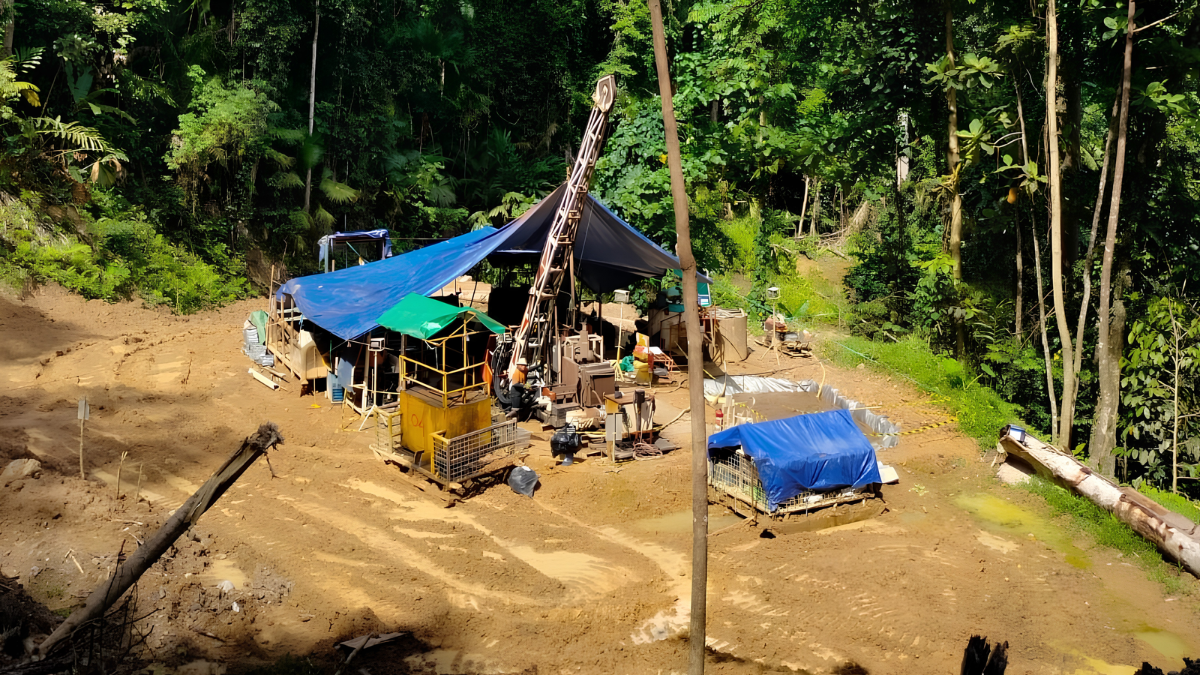
Choosing the right drilling method is one of the most important decisions during a mineral exploration project. The drilling technique selected will influence the quality of geological information collected, exploration costs, project timelines, and ultimately the confidence of exploration decisions.
Two methods that are frequently discussed are rotary drilling and diamond core drilling. While both involve rotating a drill bit to penetrate the ground, they are designed for different objectives and produce very different types of geological information.
One important clarification is that diamond core drilling is technically a type of rotary drilling, because it also uses rotary motion to cut through rock. However, in the mining and exploration industry, the term “rotary drilling” commonly refers to conventional rotary drilling methods that recover rock cuttings rather than continuous core samples.
Understanding this distinction is essential when comparing modern Drilling Services. Rather than asking which method is universally better, exploration teams should consider which technique best matches the geological objectives of their project.
This guide explains how rotary drilling and diamond core drilling differ, where each method performs best, and why diamond core drilling continues to be regarded as the preferred solution for advanced mineral exploration.
Understanding the Difference Between Rotary Drilling and Diamond Core Drilling
Although both methods use rotating drill strings, the similarities largely end there. Conventional rotary drilling breaks or crushes the rock, producing small cuttings that are carried to the surface using drilling fluid, compressed air, or foam. These cuttings provide basic geological information but do not preserve the original structure of the rock.
Diamond core drilling uses a diamond-impregnated drill bit that cuts around the outside of the rock, leaving an intact cylindrical core inside a hollow core barrel. The recovered core preserves the natural geological relationships within the rock, allowing detailed examination of lithology, mineralization, alteration, fractures, veins, and structural orientation.
This fundamental difference explains why each method serves a different purpose within professional Drilling Services.
How Conventional Rotary Drilling Works
Conventional rotary drilling uses a rotating drill bit attached to a drill string that penetrates the ground through continuous rotation. As the bit cuts or crushes the rock, drilling fluid or compressed air transports the resulting cuttings to the surface, where they can be examined or discarded depending on project objectives.
Because the drilling process focuses on penetration efficiency rather than preserving intact rock samples, rotary drilling is widely used for applications where detailed geological interpretation is not the primary objective.
Typical applications include:
- Water well drilling
- Blast hole drilling
- Infrastructure projects
- Some geotechnical investigations
- Preliminary exploration drilling
Its relatively high drilling speed makes rotary drilling attractive when large numbers of boreholes are required within limited project schedules.
How Diamond Core Drilling Works
Diamond core drilling follows a different approach. Instead of destroying the rock, the diamond drill bit cuts around a cylindrical section of the formation using industrial synthetic diamonds embedded within the cutting surface. As drilling progresses, the intact rock core enters the core barrel, where it remains protected until retrieved to the surface.
Geologists then examine the recovered core to identify:
- Rock types
- Mineralization
- Hydrothermal alteration
- Faults
- Fractures
- Veins
- Structural orientation
- Weathering
- Geotechnical characteristics
This continuous geological record provides significantly more information than fragmented rock cuttings. For this reason, diamond core drilling remains one of the most valuable Drilling Services for mineral exploration and resource evaluation.
Rotary Drilling vs Diamond Core Drilling: Key Differences
Although both drilling methods create boreholes, they are designed to achieve different exploration goals.
| Comparison | Rotary Drilling | Diamond Core Drilling |
| Sample type | Rock cuttings | Continuous rock core |
| Geological detail | Basic | Comprehensive |
| Structural interpretation | Limited | Excellent |
| Drilling speed | Faster | Slower |
| Operational cost | Generally lower | Higher |
| Primary objective | Efficient drilling | Geological confidence |
Rather than viewing one method as universally superior, these differences illustrate why each technique is selected according to project requirements.
Which Method Provides Better Geological Information?
For advanced mineral exploration, the quality of geological information often matters more than drilling speed.
Rotary drilling provides representative rock cuttings that help geologists identify general lithology and collect samples for laboratory analysis. However, because the original rock structure is destroyed during drilling, important geological features such as fracture orientation, vein geometry, fault planes, and alteration relationships cannot be observed directly. Diamond core drilling preserves these features in their original condition.
Continuous core allows geologists to study how different rock units interact, understand the structural controls of mineralization, and build more accurate geological models. This additional information becomes increasingly valuable during resource estimation, geotechnical investigations, metallurgical studies, and advanced exploration programs.
It is one of the primary reasons diamond core drilling remains the preferred choice for high-quality Drilling Services throughout the mining industry.
Rotary Drilling and Diamond Core Drilling in Indonesia
Indonesia’s diverse geological environment requires different drilling approaches depending on exploration objectives.
Rotary Drilling Applications
Conventional rotary drilling is commonly used for:
- Water well development
- Infrastructure construction
- Blast hole drilling
- Certain geotechnical investigations
- Preliminary drilling programs
These projects generally prioritize drilling efficiency rather than continuous geological sampling.
Diamond Core Drilling Applications
For mineral exploration, diamond core drilling plays a much larger role. Indonesia’s major mineral deposits including porphyry copper-gold systems in Papua and Nusa Tenggara, epithermal gold deposits in Sumatra and Java, and nickel projects in Sulawesi and Halmahera often require detailed geological interpretation before resource evaluation.
Diamond core drilling provides the continuous geological record needed to understand mineralization, alteration, structural controls, and rock quality within these complex geological environments.
As exploration progresses from regional target generation toward resource definition, diamond core drilling becomes increasingly important.
Speed vs Geological Confidence
One of the biggest trade-offs between the two methods is the balance between drilling speed and geological information. Conventional rotary drilling generally progresses more quickly because it focuses on penetration rather than preserving intact samples. Diamond core drilling is slower because the drilling process is designed to maximize core recovery and maintain sample quality. Although rotary drilling may reduce drilling time in some situations, faster drilling does not necessarily lead to better exploration decisions.
In many advanced exploration projects, the additional geological information provided by continuous core reduces uncertainty, improves geological interpretation, and helps avoid costly errors during later project stages. For this reason, many exploration companies view diamond core drilling as an investment in data quality rather than simply a drilling expense.
Which Method Delivers Better Results for Mineral Exploration?
The answer depends on the objectives of the drilling program. If the goal is to complete boreholes quickly for applications such as water wells, blast holes, or certain infrastructure projects, conventional rotary drilling is often the more practical choice.
However, if the objective is to understand geological structures, evaluate mineralization, estimate resources, or support mine planning, diamond core drilling consistently delivers more comprehensive geological information.
Internationally recognized mineral resource reporting practices place strong emphasis on representative geological data, accurate logging, and reliable sampling. Continuous core recovery supports these objectives by preserving the geological relationships required for confident interpretation.
For this reason, professional Drilling Services supporting advanced mineral exploration frequently rely on diamond core drilling as the primary investigation method.
Integrating Drilling with Modern Exploration
Successful exploration programs rarely rely on drilling alone. Instead, drilling is integrated with multiple exploration techniques that gradually reduce geological uncertainty.
A typical exploration workflow may include:
- Geological mapping
- Geochemical sampling
- Geophysical surveys such as CSAMT
- Target generation
- Diamond core drilling
- Laboratory assays
- Resource modeling
In some projects, conventional rotary drilling may be used for specific engineering or infrastructure purposes, but when detailed geological information is required, diamond core drilling generally becomes the preferred investigation method.
This integrated approach allows exploration teams to maximize the value of every stage of the exploration process.
How Puncakbaru Jayatama Supports Exploration Projects
Reliable geological information is the foundation of successful mineral exploration.
At Puncakbaru Jayatama (PTPJ), our Drilling Services focus on delivering high-quality diamond core drilling solutions that support geological interpretation, structural analysis, and resource evaluation across Indonesia’s diverse mining environments.
By combining professional drilling practices with geological expertise and complementary exploration methods such as geophysical surveys, PTPJ helps clients obtain dependable subsurface information that supports better exploration planning and decision-making.
Every drilling program is designed according to the project’s geological objectives, ensuring the selected methodology provides the information needed to advance exploration with confidence.
Frequently Asked Questions
Is diamond core drilling a type of rotary drilling?
Yes. Diamond core drilling uses rotary motion to cut through rock, making it technically a type of rotary drilling. However, in industry discussions, “rotary drilling” usually refers to conventional rotary methods that recover rock cuttings rather than continuous core.
Which drilling method is faster?
Conventional rotary drilling generally progresses faster because it prioritizes drilling efficiency rather than preserving intact rock samples.
Which method provides better geological information?
Diamond core drilling provides significantly more geological information because it recovers continuous rock core that preserves structures, fractures, alteration, and mineralization.
Is rotary drilling cheaper than diamond core drilling?
In many situations, conventional rotary drilling has lower operational costs. However, diamond core drilling often provides greater long-term value by reducing geological uncertainty and improving exploration confidence.
Which drilling method is better for mineral exploration?
For advanced mineral exploration, diamond core drilling is generally considered the preferred method because it delivers the continuous geological information required for accurate interpretation, resource estimation, and mine planning.
Conclusion
Both rotary drilling and diamond core drilling have important roles within the mining industry, but they are designed for different purposes.
Conventional rotary drilling excels when drilling efficiency, speed, and large-scale borehole construction are the primary objectives. It remains an effective solution for applications such as water wells, blast holes, infrastructure projects, and certain preliminary investigations.
Diamond core drilling, however, provides a level of geological detail that conventional rotary drilling cannot match. Continuous core recovery allows geologists to understand rock relationships, structural controls, mineralization, and alteration with far greater confidence, making it the preferred method for advanced mineral exploration and resource evaluation.
Ultimately, the best drilling method depends on project objectives. For exploration programs where reliable geological information is critical, diamond core drilling consistently delivers the most comprehensive and valuable results.
Advance Your Exploration Program with PTPJ’s Drilling Services
Selecting the right drilling method is essential for building a successful exploration program.
Puncakbaru Jayatama (PTPJ) provides professional Drilling Services that support mineral exploration projects across Indonesia through high-quality diamond core drilling, reliable geological data, and experienced technical support.
Whether your project involves gold, copper, nickel, geothermal resources, or other mineral commodities, our team is committed to delivering the geological information needed to support informed exploration decisions and long-term project success. Contact PTPJ today to learn how our drilling expertise can strengthen your next exploration program.