
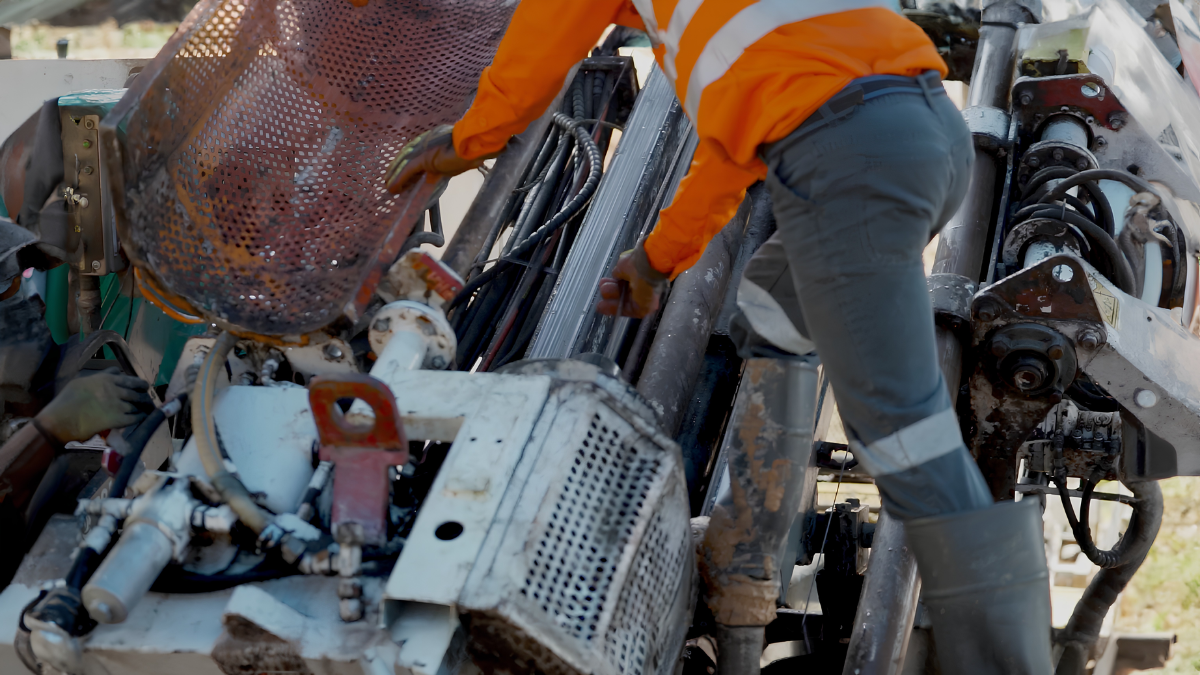
Choosing the right drilling method is one of the most important decisions during a mineral exploration program. Different drilling techniques are designed to answer different geological questions, and selecting the appropriate approach can significantly influence exploration efficiency, project costs, and the quality of geological information obtained.
Among the most widely used Drilling Services in the mining industry is Reverse Circulation (RC) drilling, a technique known for its speed, cost efficiency, and ability to recover representative rock chip samples for laboratory analysis. RC drilling is commonly used during early to intermediate exploration stages, helping companies quickly evaluate mineral potential across large areas before investing in more detailed investigations.
However, while Reverse Circulation drilling offers many advantages, it is not always the best solution. When projects require detailed geological interpretation, structural analysis, or high-confidence resource evaluation, diamond core drilling often becomes the preferred method.
Understanding the strengths and limitations of each approach allows exploration teams to build more effective drilling programs. This guide explains how Reverse Circulation drilling works, its key benefits, when it should be used, and why it is often combined with other professional Drilling Services during modern mineral exploration.
What Is Reverse Circulation (RC) Drilling?
Reverse Circulation (RC) drilling is a percussion drilling method that uses a dual-wall drill rod and compressed air to recover rock chips from beneath the surface. Unlike diamond core drilling, which retrieves continuous cylindrical rock samples, RC drilling breaks the rock into small fragments. These rock chips are transported to the surface through the inner tube of the drill string using compressed air, allowing geologists to collect representative samples for logging and laboratory analysis.
The term “Reverse Circulation” refers to the direction of airflow inside the drill rods. Compressed air travels down between the outer and inner drill tubes before returning upward through the center tube, carrying rock chips directly to the surface. Because samples travel inside the drill string, contamination from the borehole wall is minimized compared with some conventional percussion drilling methods, making RC drilling a reliable option for geochemical sampling.
Today, RC drilling is one of the most commonly used Drilling Services for mineral exploration projects worldwide.
How Reverse Circulation Drilling Works
Although RC drilling uses specialized equipment, its operating principle is relatively straightforward. The drilling rig rotates a drill string equipped with a pneumatic hammer and drill bit. Compressed air powers the hammer while simultaneously lifting broken rock fragments through the inner tube of the drill rods.
Once the samples reach the surface, they pass through a cyclone where rock chips are separated from the air stream before being collected in sample bags.Each sample interval is carefully labeled and logged by geologists, who record lithology, weathering, alteration, and other observable characteristics. Selected samples are then sent to accredited laboratories for geochemical analysis to determine mineral content. This efficient sampling process allows exploration companies to evaluate large exploration areas relatively quickly while maintaining consistent sample collection procedures.
Why RC Drilling Is Popular in Mineral Exploration
One of the biggest reasons companies choose Reverse Circulation drilling is efficiency. Compared with many other Drilling Services, RC drilling can complete exploration programs more quickly while producing representative rock samples suitable for laboratory assays.
Several advantages contribute to its popularity. First, drilling rates are generally faster than diamond core drilling, allowing larger areas to be evaluated within a shorter timeframe. Second, operational costs are often lower because drilling progresses more rapidly and sample handling is relatively straightforward. Third, RC drilling produces representative rock chip samples that are well suited for geochemical analysis, making it an excellent choice during exploration programs where the primary objective is identifying mineralized zones.
These characteristics make RC drilling particularly valuable during regional exploration, resource expansion, and early-stage drilling campaigns.
Typical Applications of Reverse Circulation Drilling
Reverse Circulation drilling is widely used throughout the mining industry because it supports several exploration objectives. Some of the most common applications include:
- Greenfield mineral exploration
- Brownfield resource expansion
- Infill drilling
- Grade control programs
- Geochemical sampling
- Preliminary resource evaluation
For many exploration companies, RC drilling provides an effective balance between drilling productivity and sample quality during the early stages of exploration.
RC Drilling in Indonesian Mineral Exploration
Indonesia’s diverse geology creates demand for different drilling techniques depending on the type of mineral deposit being explored.
Gold and Copper Exploration
Many gold and copper exploration programs use RC drilling to rapidly evaluate large target areas identified through geological mapping, geochemical surveys, or geophysical methods such as CSAMT.
Representative rock chip samples allow geologists to identify mineralized intervals before planning more detailed drilling programs.
Once promising mineralization is confirmed, companies frequently transition to diamond core drilling to obtain continuous rock samples for structural interpretation and resource definition.
Nickel Exploration
Indonesia is the world’s largest nickel producer, with laterite deposits concentrated in regions such as Sulawesi and Halmahera. Depending on project objectives, nickel exploration may involve auger drilling, RC drilling, and diamond drilling at different stages. Reverse Circulation drilling is useful for collecting representative samples from deeper weathered zones and supporting grade evaluation.
However, when exploration requires detailed geological interpretation, metallurgical testing, geotechnical investigations, or bedrock characterization, diamond core drilling generally provides more comprehensive geological information.
RC Drilling vs Diamond Core Drilling
One of the most common questions during exploration planning is whether Reverse Circulation or diamond core drilling should be selected. The answer depends on the information needed.
| Reverse Circulation Drilling | Diamond Core Drilling |
| Produces rock chips | Produces continuous core |
| Faster drilling rates | Slower but more detailed |
| Lower operational cost | Higher investment |
| Excellent for geochemical sampling | Excellent for geological interpretation |
| Limited structural information | Complete structural information |
| Suitable for exploration screening | Preferred for resource definition |
Rather than competing methods, RC and diamond drilling often complement one another. RC drilling allows exploration teams to evaluate multiple targets efficiently, while diamond core drilling provides the detailed geological information needed to validate those targets before resource estimation. For projects requiring high-confidence geological interpretation, professional Drilling Services based on diamond core recovery remain the industry standard.
When Should You Choose Reverse Circulation Drilling?
Reverse Circulation drilling performs best when exploration objectives emphasize speed and representative sampling rather than detailed structural analysis. RC drilling is particularly suitable when:
- Evaluating large exploration areas
- Conducting early-stage exploration
- Expanding known mineral resources
- Collecting geochemical samples
- Supporting grade control programs
- Working within exploration budgets that require rapid drilling progress
In these situations, RC drilling provides an efficient way to gather valuable geological information before committing to more intensive drilling methods.
When Is Diamond Core Drilling the Better Choice?
Although Reverse Circulation drilling offers significant advantages, there are many situations where diamond core drilling is the preferred solution. Projects involving resource estimation, geological modeling, structural interpretation, geotechnical investigations, and metallurgical testing require continuous core recovery that RC drilling cannot provide.
Diamond core allows geologists to examine fractures, veins, alteration patterns, fault orientations, and rock textures that are essential for understanding the geometry and continuity of a mineral deposit. For advanced exploration programs where geological confidence is critical, diamond core drilling remains the benchmark among professional Drilling Services. Rather than replacing RC drilling, diamond drilling builds upon earlier exploration results by providing the level of geological detail required for informed investment decisions.
Integrating RC Drilling with Other Exploration Methods
Successful exploration programs rarely depend on a single technique. Instead, exploration teams combine multiple datasets to reduce uncertainty throughout the exploration process. A typical exploration workflow may include:
- Geological mapping
- Geochemical sampling
- Magnetic survey
- CSAMT Survey
- Reverse Circulation drilling
- Diamond core drilling
- Laboratory assays
- Resource estimation
Each stage provides new information that helps refine exploration targets before moving to the next level of investigation. Using this integrated approach allows companies to optimize exploration budgets while improving confidence in drilling decisions.
How Puncakbaru Jayatama Supports Exploration Projects
Every mineral exploration program has different objectives, making the selection of appropriate Drilling Services an important part of exploration planning. At Puncakbaru Jayatama (PTPJ), our focus is on delivering professional drilling solutions that provide reliable geological information for exploration projects across Indonesia.
For projects requiring high-confidence geological interpretation, structural logging, and detailed resource evaluation, diamond core drilling remains the preferred approach because of the quality of geological data it provides. By integrating drilling activities with geological mapping, geophysical surveys, laboratory analysis, and exploration planning, PTPJ helps clients build a more complete understanding of subsurface conditions while supporting informed exploration decisions.
Frequently Asked Questions
What is Reverse Circulation drilling?
Reverse Circulation drilling is a drilling method that uses compressed air and dual-wall drill rods to recover representative rock chip samples for geological logging and laboratory analysis.
Why is it called Reverse Circulation?
The name refers to the airflow inside the drill rods. Compressed air travels down between the drill tubes and returns upward through the inner tube, carrying rock chips to the surface.
Is RC drilling cheaper than diamond drilling?
In many exploration programs, RC drilling has lower operational costs because drilling progresses more quickly. However, the most appropriate method depends on the project’s geological objectives rather than cost alone.
Can RC drilling replace diamond core drilling?
Not entirely. While RC drilling is excellent for exploration sampling, it does not recover continuous core or preserve detailed geological structures. Diamond core drilling is generally preferred when detailed geological interpretation or resource estimation is required.
Which drilling method is better for mineral exploration?
Both methods have important roles. RC drilling is often used for rapid exploration and target evaluation, while diamond core drilling is considered the preferred method for advanced exploration because it provides higher-quality geological information.
Conclusion
Reverse Circulation drilling has become an essential part of modern mineral exploration because it provides fast, efficient, and representative rock chip sampling across large exploration areas. Its ability to support early-stage exploration, resource expansion, and geochemical analysis makes it one of the most widely used Drilling Services in the mining industry.
At the same time, understanding the limitations of RC drilling is equally important. Because it does not recover continuous core, it cannot provide the same level of structural and geological detail required for advanced exploration, resource estimation, or geotechnical investigations.
For this reason, many successful exploration programs combine RC drilling with diamond core drilling. RC efficiently identifies promising targets, while diamond core drilling confirms geological interpretations and provides the comprehensive information needed for confident decision-making. Ultimately, selecting the right drilling method depends on the exploration objectives, geological conditions, and the quality of information required to move a project forward.
Explore Reliable Drilling Services with PTPJ
Whether you’re evaluating a new exploration prospect or advancing an established mineral project, selecting the right drilling approach is essential for obtaining reliable geological information. Puncakbaru Jayatama (PTPJ) provides professional Drilling Services tailored to the needs of mineral exploration projects across Indonesia. With expertise in advanced exploration programs and a strong focus on high-quality geological data, our team helps clients develop drilling strategies that support better geological understanding and more informed project decisions. Contact PTPJ today to learn how our drilling expertise can strengthen your next mineral exploration program.