
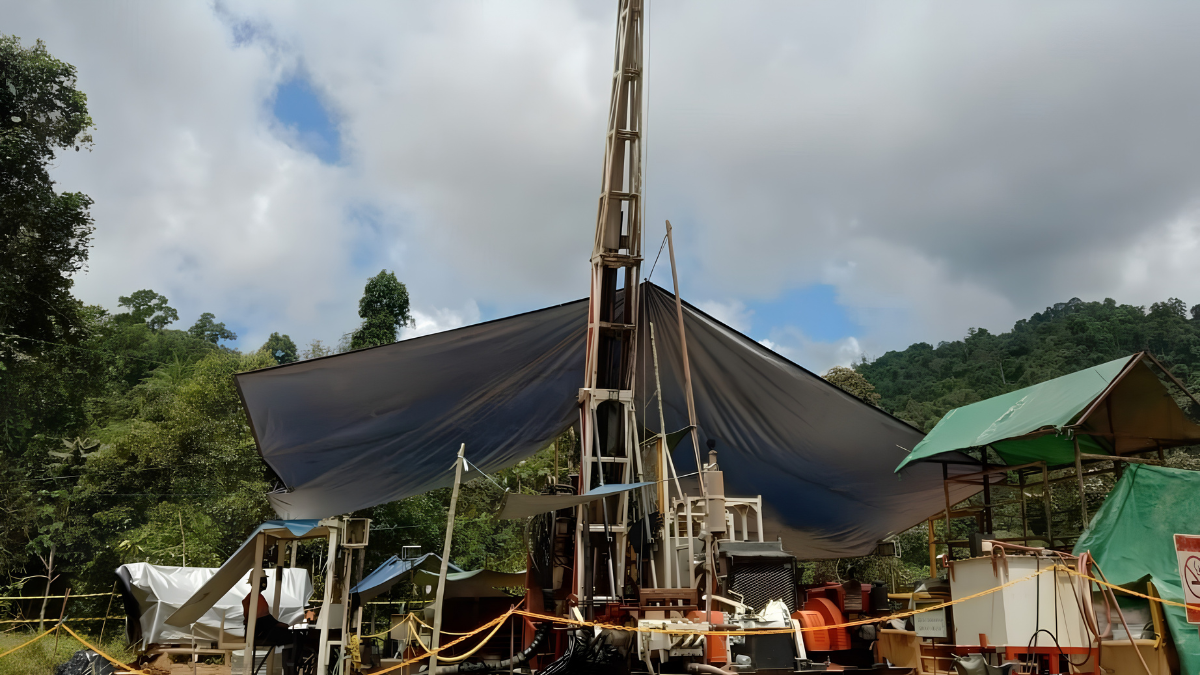
Mining project begins with one essential question: what is actually beneath the surface? While geological mapping, geochemical sampling, and geophysical surveys can identify promising exploration targets, they cannot provide direct physical evidence of the rocks below ground. At some point, exploration teams need to recover actual rock samples to confirm geological interpretations, evaluate mineralization, and determine whether a prospect has economic potential.
This is where diamond core drilling becomes essential. Among the many Drilling Services available to the mining industry, diamond core drilling has long been regarded as the gold standard for mineral exploration because it produces continuous rock core that preserves the geological characteristics of the subsurface. Unlike drilling methods that only recover rock chips or disturbed material, diamond core drilling allows geologists to examine the complete sequence of underground rock formations in their original condition.
Across Indonesia, diamond core drilling plays an important role in exploring gold, copper, nickel, geothermal resources, and other mineral commodities. It provides the high-quality geological information required to support exploration decisions, resource estimation, geotechnical analysis, and future mine planning. This guide explains how diamond core drilling works, why it is considered the industry standard, and how professional Drilling Services contribute to modern mineral exploration projects.
What Is Diamond Core Drilling?
Diamond core drilling is a mineral exploration technique that uses a rotating drill bit embedded with industrial-grade synthetic diamonds to cut a cylindrical sample of rock, commonly known as a drill core.
Rather than breaking the rock into fragments, the drill bit cuts around the outside of the core, allowing an intact cylinder of rock to enter the core barrel. Once the core barrel is full, it is retrieved to the surface so geologists can examine the recovered rock.
This continuous core provides valuable geological information that cannot be obtained from surface mapping alone. Geologists use the recovered samples to study rock types, mineralization, geological structures, hydrothermal alteration, fractures, veins, weathering, and other characteristics that help determine the potential of a mineral deposit.
Because of the quality of information it provides, diamond core drilling remains one of the most important Drilling Services used during advanced mineral exploration.
Why Is It Called Diamond Core Drilling?
One of the most common misconceptions is that diamond core drilling uses gemstones. In reality, the drill bit contains industrial synthetic diamonds, selected because diamond is the hardest naturally occurring material. These diamonds are embedded into the drill bit to maintain cutting performance while drilling through hard rock formations.
The exceptional hardness of diamond allows the drill bit to cut efficiently through a wide range of geological conditions, including volcanic rocks, intrusive formations, metamorphic rocks, and other hard rock environments commonly encountered in mineral exploration. The diamonds are simply a cutting material they are not recovered as part of the drilling process.
How Diamond Core Drilling Works
Although the equipment is highly specialized, the drilling process follows a logical sequence. First, the drilling rig is positioned at the planned drill collar location based on geological interpretation and exploration objectives. As the drill string rotates, the diamond drill bit cuts a cylindrical section of rock while drilling fluid circulates through the system to cool the bit and remove cuttings.
The intact rock core enters a hollow core barrel located directly behind the drill bit. Once the barrel reaches its capacity, it is retrieved to the surface using specialized wireline equipment without removing the entire drill string.
The recovered core is carefully placed into labeled core trays, where geologists record lithology, geological structures, mineralization, alteration, fractures, and core recovery before selected intervals are submitted for laboratory analysis. This systematic process allows exploration teams to build a detailed geological record of subsurface conditions.
Why Continuous Core Makes Diamond Drilling the Gold Standard
The greatest advantage of diamond core drilling is the ability to recover continuous, relatively undisturbed rock samples. Unlike fragmented rock chips produced by other drilling methods, continuous core preserves geological relationships that are critical for exploration.
From a single drill core, geologists can evaluate:
- Rock type (lithology)
- Mineralization
- Hydrothermal alteration
- Quartz veins
- Faults and fractures
- Structural orientation
- Weathering intensity
- Rock quality
- Core recovery
This information plays an essential role in determining the geometry of an ore body, understanding mineral controls, and developing reliable geological models. For this reason, professional Drilling Services based on diamond core recovery remain the preferred choice for advanced exploration and mineral resource evaluation.
Diamond Core Drilling vs Other Drilling Methods
Different drilling methods serve different exploration purposes. Diamond core drilling focuses on obtaining high-quality geological information, while other methods may prioritize drilling speed or lower operating costs.
| Method | Typical Application |
| Diamond Core Drilling | Detailed geological investigation, structural analysis, resource definition |
| Reverse Circulation (RC) Drilling | Rapid exploration and geochemical sampling |
| Air Core Drilling | Shallow weathered deposits and reconnaissance drilling |
| Auger Drilling | Very shallow soil and laterite investigations |
Reverse Circulation drilling, for example, produces rock chips that are suitable for laboratory assays but do not preserve geological structures in the same way as continuous drill core. Air core drilling is commonly used for shallow exploration, particularly in weathered materials, but it cannot provide the detailed geological information required for advanced resource evaluation. When accurate geological interpretation is the priority, diamond core drilling remains the preferred solution.
Diamond Core Drilling in Indonesian Mineral Exploration
Indonesia’s geology presents a wide variety of exploration challenges, making high-quality Drilling Services essential across multiple commodities.
Gold and Copper Exploration
Indonesia hosts numerous porphyry copper-gold systems and epithermal gold deposits associated with volcanic arcs and major fault systems. After exploration teams identify promising targets using geological mapping and geophysical surveys such as CSAMT, diamond core drilling is typically used to confirm mineralization, evaluate alteration patterns, and obtain representative samples for laboratory analysis. Because these deposits often extend hundreds of meters beneath the surface, continuous drill core is essential for understanding their geological complexity.
Nickel Exploration
Indonesia is the world’s leading producer of nickel, and exploration programs commonly focus on laterite deposits developed over ultramafic rocks. Early-stage nickel exploration often uses auger drilling or Reverse Circulation methods to define laterite thickness and collect geochemical samples.
However, diamond core drilling remains an important component of many nickel projects when geologists require detailed information about bedrock conditions, structural geology, metallurgical testing, or geotechnical investigations. Rather than replacing other drilling methods, diamond drilling complements them by providing higher-quality geological information.
Geothermal Exploration
Beyond mining, diamond core drilling is also widely used during geothermal exploration. Continuous core helps engineers evaluate rock properties, alteration minerals, fractures, and reservoir characteristics that influence geothermal resource development.
The Relationship Between Geophysical Surveys and Drilling Services
Modern exploration rarely depends on drilling alone. Instead, drilling is usually preceded by multiple exploration methods that help identify the most promising targets.
A typical exploration workflow may include:
- Geological mapping
- Geochemical sampling
- Magnetic survey
- CSAMT Survey
- Diamond core drilling
- Laboratory assays
- Resource estimation
In this workflow, geophysical surveys reduce uncertainty by identifying geological structures beneath the surface, while professional Drilling Services provide the physical evidence required to verify those interpretations. Together, these methods help exploration companies make more informed decisions while reducing unnecessary drilling costs.
Why Core Recovery Matters
One important indicator of drilling quality is core recovery, which refers to the percentage of drilled rock successfully recovered as continuous core. High core recovery provides more complete geological information and increases confidence in exploration results.
Poor recovery may result in missing geological information, making interpretation more difficult and potentially reducing confidence in resource estimation. Experienced drilling contractors focus on maximizing core recovery through proper equipment selection, drilling techniques, and careful handling of recovered core. High-quality Drilling Services therefore involve not only drilling efficiently but also preserving the integrity of the geological samples.
How Puncakbaru Jayatama Supports Mineral Exploration
At Puncakbaru Jayatama (PTPJ), professional Drilling Services are designed to support mineral exploration projects by delivering high-quality core recovery and dependable geological data across Indonesia’s diverse mining environments.
Working alongside geological mapping, geophysical surveys, laboratory analysis, and exploration planning, diamond core drilling contributes to a more complete understanding of subsurface conditions before major investment decisions are made. Our drilling team has proven experience in the most challenging environments. Our new highly portable rigs demonstrate excellent productivity, reliability and safety, supporting our discovery team during the drilling program. Suitable for high-accuracy resource definition, geo-tech studies, hydrogeology studies, and grade control production drilling.
Because every exploration project has unique geological objectives, drilling programs should always be planned according to the project’s geology, target depth, and exploration goals.
Frequently Asked Questions
What is diamond core drilling?
Diamond core drilling is an exploration method that uses a diamond-impregnated drill bit to recover continuous cylindrical rock samples for geological analysis.
Why is diamond drilling considered the gold standard?
Unlike other drilling methods, diamond drilling preserves continuous rock core that allows geologists to study lithology, mineralization, geological structures, fractures, and alteration in detail.
Why are diamonds used in the drill bit?
Industrial synthetic diamonds are extremely hard and wear-resistant, allowing the drill bit to cut through hard rock formations efficiently.
Is diamond drilling better than Reverse Circulation drilling?
Each method serves different purposes. Reverse Circulation drilling is often faster for reconnaissance exploration, while diamond drilling provides superior geological information and is generally preferred for advanced exploration and resource definition.
How deep can diamond core drilling go?
Drilling depth depends on the drilling rig, hole diameter, and geological conditions. Mineral exploration holes commonly range from around 100 meters to more than 1,000 meters, with specialized programs capable of drilling significantly deeper.
Conclusion
Diamond core drilling remains the gold standard for mineral exploration because it provides continuous, high-quality rock samples that reveal the geological characteristics hidden beneath the surface. From identifying mineralization and hydrothermal alteration to supporting structural interpretation and resource estimation, professional Drilling Services provide the reliable geological information needed to move exploration projects forward with greater confidence.
Although other drilling methods each have their place, diamond core drilling continues to play a central role in exploring Indonesia’s gold, copper, nickel, geothermal, and other mineral resources because of the quality and completeness of the geological data it delivers. When integrated with geological mapping, geophysical surveys such as CSAMT, and laboratory analysis, diamond core drilling helps transform exploration targets into informed drilling decisions and ultimately supports more successful mineral exploration programs.
Support Your Exploration Program with PTPJ’s Drilling Services
If your mineral exploration project requires accurate geological information and reliable core recovery, Puncakbaru Jayatama (PTPJ) provides professional Drilling Services tailored to Indonesia’s diverse geological conditions.
From exploration drilling to integrated geological support, our experienced team helps mining companies obtain the high-quality subsurface information needed to improve exploration confidence and support informed project decisions. Contact PTPJ today to learn how our Drilling Services can strengthen your next mineral exploration program.